

Applying for a marriage-based green card can appear straightforward. A U.S. citizen or lawful permanent resident marries a foreign national, files a petition, and provides evidence that the marriage is genuine.
In practice, the process can become complicated quickly. The appropriate filing method depends on where the foreign spouse lives, how they entered the United States, their current immigration status, prior marriages, criminal history, financial circumstances, and other factors. Even couples in legitimate marriages can face delays, requests for evidence, or denials when their applications are incomplete or inconsistent.
Attorney Hayoon Kane has conducted more than 300 immigration consultations, including consultations involving marriage-based green cards, family immigration, unlawful presence, and other complex immigration concerns. That experience helps the firm identify potential problems early and prepare each case according to the couple’s circumstances.
What Is a Marriage-Based Green Card?

A marriage-based green card allows the foreign spouse of a U.S. citizen or lawful permanent resident to become a lawful permanent resident of the United States.
The process normally begins when the sponsoring spouse files Form I-130, Petition for Alien Relative. Filing or approving Form I-130 does not grant the foreign spouse lawful status, employment authorization, or permanent residence. It establishes the qualifying family relationship and allows the couple to proceed to the appropriate green card stage.
The next steps depend on several factors, including:
- Whether the sponsoring spouse is a U.S. citizen or permanent resident
- Whether the foreign spouse is inside or outside the United States
- How the foreign spouse entered the country
- Whether an immigrant visa is immediately available
- Whether the foreign spouse is eligible to complete the green card process inside the United States
- Whether unlawful presence, fraud, criminal history, or another inadmissibility issue applies
A legal marriage alone does not guarantee approval. The couple must also establish that the marriage was entered into in good faith and not primarily to obtain an immigration benefit.
The Two Main Marriage-Based Green Card Processes
Marriage-based cases generally proceed through consular processing or, when legally available, adjustment of status.
Consular Processing
Consular processing is generally used when the foreign spouse lives outside the United States or cannot complete the permanent-residence process from within the country.
After USCIS approves Form I-130, the case generally moves to the National Visa Center. The applicant submits the required fees, civil documents, financial-support materials, and immigrant visa application before attending an interview at a U.S. embassy or consulate.
If the immigrant visa is approved, the foreign spouse may travel to the United States and become a permanent resident upon admission.
Adjustment of Status
Adjustment of status allows certain eligible applicants to request permanent residence from within the United States by filing Form I-485, Application to Register Permanent Residence or Adjust Status.
Eligibility depends on more than marriage to a U.S. citizen or permanent resident. The applicant’s manner of entry, immigration history, current status, visa availability, and any grounds of inadmissibility must be evaluated.
Immigration policies governing whether an applicant may complete the process inside the United States can also change. Before filing Form I-485 or making international travel plans, applicants should obtain advice based on the law and agency policy in effect at that time.
Leaving the United States to pursue consular processing can trigger serious consequences for some applicants, including unlawful-presence bars. No one should depart the country for an immigrant visa interview without first evaluating those risks.
How an Immigration Attorney Can Help Before Filing

An attorney’s work should begin before the forms are prepared. The first step is determining whether a marriage-based case is legally available and which procedure is appropriate.
During an initial case evaluation, an attorney may review:
- The immigration status of the sponsoring spouse
- The foreign spouse’s manner and date of entry
- Visa overstays or unauthorized employment
- Previous immigration applications
- Prior removal or deportation proceedings
- Arrests, charges, or convictions
- Previous marriages and divorces
- The couple’s living arrangements
- The sponsoring spouse’s income
- Possible grounds of inadmissibility
- Whether a waiver may be required
- The risks of international travel
- Alternative immigration options
This review can uncover issues that may not be obvious from the USCIS forms. For example, a visa overstay may be treated differently depending on whether the sponsoring spouse is a U.S. citizen or permanent resident. An applicant who entered without inspection may face different options from someone who entered with a visa.
A prior finding of immigration fraud, a previous removal order, or a false claim to U.S. citizenship may create particularly serious concerns. These issues should be evaluated before any new application is filed.
Proving That the Marriage Is Genuine
USCIS or a consular officer must be satisfied that the couple entered the marriage in good faith rather than primarily for immigration purposes.
A marriage certificate establishes that the marriage is legally recognized, but it does not establish the couple’s intentions. Applicants generally need additional evidence showing that they have built or intend to build a life together.
Potential evidence may include:
- A joint lease, mortgage, or property deed
- Joint bank or credit-card statements
- Joint federal and state tax returns
- Insurance policies naming each other as beneficiaries
- Utility bills or official correspondence sent to a shared address
- Birth certificates for children born to the couple
- Travel records
- Photographs from different periods and events
- Messages, call logs, or other records of regular communication
- Documents showing shared financial responsibilities
- Affidavits from relatives or friends with personal knowledge of the relationship
USCIS specifically identifies joint property, shared residence, combined finances, children’s birth certificates, and affidavits as potential evidence of a bona fide marriage.
The most useful evidence depends on the couple’s circumstances. Submitting hundreds of disorganized pages does not necessarily create a stronger case. The evidence should present a clear and consistent account of the relationship.
An attorney can help identify gaps, organize the supporting documents, and explain unusual circumstances before they become a source of confusion.
What If the Couple Does Not Live Together?
Living separately does not automatically mean that a marriage is fraudulent. Couples may live apart because of employment, education, military service, caregiving responsibilities, housing costs, or the immigration process itself.
However, separate residences may lead immigration authorities to ask additional questions. The couple should be prepared to explain:
- Why they live apart
- How long the arrangement is expected to continue
- How often they see one another
- How they communicate
- Whether they share expenses
- What plans they have for living together
Evidence of visits, travel, communication, shared finances, and future plans may help establish that the marriage remains genuine.
The explanation must be truthful. Couples should never create a joint lease, bank account, or other document solely to make their case appear stronger.
Preparing the Required Forms and Documents

Marriage-based green card cases may require several filings. The correct forms depend on the applicant’s location and eligibility.
Common forms include:
- Form I-130, Petition for Alien Relative: Filed by the sponsoring spouse to establish the qualifying marital relationship.
- Form I-130A, Supplemental Information for Spouse Beneficiary: Provides additional biographical information about the foreign spouse.
- Form I-485, Application to Register Permanent Residence or Adjust Status: Used by applicants who are legally eligible to seek permanent residence from within the United States.
- Form I-864, Affidavit of Support: Used by the sponsor to accept financial responsibility and demonstrate that the intending immigrant has sufficient financial support.
- Form I-693, Report of Immigration Medical Examination and Vaccination Record: Documents the required immigration medical examination for adjustment applicants.
- Form DS-260, Immigrant Visa Electronic Application: Used during consular processing.
- Form I-765, Application for Employment Authorization: May be used to request employment authorization when the applicant has an eligible basis.
- Form I-131, Application for Travel Documents, Parole Documents, and Arrival/Departure Records: May be used to request certain travel documentation when legally available.
Additional forms may be required for waivers, joint sponsors, household members, or other circumstances.
An attorney can determine which forms apply, review them for inconsistencies, and confirm that the filing complies with current instructions. Form editions, filing addresses, fees, and agency policies can change, so applicants should not rely on an old checklist or another couple’s application.
Preparing for the Marriage Interview
Many marriage-based applicants must attend an interview with USCIS or a consular officer. The interview allows the government to verify the information in the application and evaluate the couple’s eligibility.
Questions may address:
- How the couple met
- How the relationship developed
- The marriage proposal and wedding
- Their daily routines
- Their home and living arrangements
- Their finances
- Important family events
- Previous relationships or marriages
- Inconsistencies in the application
- The foreign spouse’s immigration history
The goal is not to memorize identical answers. Attempting to rehearse a manufactured story can create new problems. Instead, both spouses should review the forms and supporting evidence so they understand what was submitted and can correct genuine mistakes if necessary.
An attorney can explain what to expect, identify areas that may require clarification, and help the couple prepare without encouraging scripted or misleading answers.
Responding to Requests for Evidence

USCIS may issue a Request for Evidence when it determines that the original filing does not contain enough information to decide the case.
A request may concern:
- Insufficient evidence of a bona fide marriage
- Missing financial documents
- Questions about the sponsor’s income
- Missing proof that previous marriages ended
- Incomplete medical documentation
- Inconsistent addresses or dates
- Questions about the applicant’s immigration history
- Missing signatures, translations, or civil records
A Request for Evidence is not necessarily a denial, but it should be taken seriously. The response must address every issue by the deadline stated in the notice.
An attorney can review the original filing, determine what USCIS is requesting, gather responsive evidence, and prepare a clear explanation. Simply resubmitting the same documents or overwhelming USCIS with unrelated material may not resolve the problem.
Financial Sponsorship Requirements
Most marriage-based green card cases require Form I-864, Affidavit of Support. The sponsoring spouse generally must demonstrate sufficient income or assets under the applicable federal guidelines.
If the sponsor’s income is insufficient, the case may require:
- Evidence of qualifying assets
- Income from an eligible household member
- Form I-864A from a household member
- A qualifying joint sponsor
- Additional tax or employment documentation
Using a joint sponsor does not replace the petitioning spouse. The petitioner generally must still submit an Affidavit of Support even when another person agrees to help meet the financial requirements.
The obligations created by Form I-864 can continue after divorce. Sponsors should understand the legal consequences before signing it.
Does a Spouse Have to Be a U.S. Citizen?
No. Both U.S. citizens and lawful permanent residents may petition for a spouse.
Spouses of U.S. citizens are generally classified as immediate relatives, so they are not subject to the same annual visa-category limits as spouses of permanent residents.
Spouses of permanent residents generally fall within the family-based second-preference category and may need to wait until an immigrant visa is available. If the sponsoring spouse becomes a U.S. citizen while the petition is pending, the couple may be able to update the case.
Visa availability and filing rules should be reviewed before submitting the green card application.
What If the Foreign Spouse Has Overstayed a Visa?
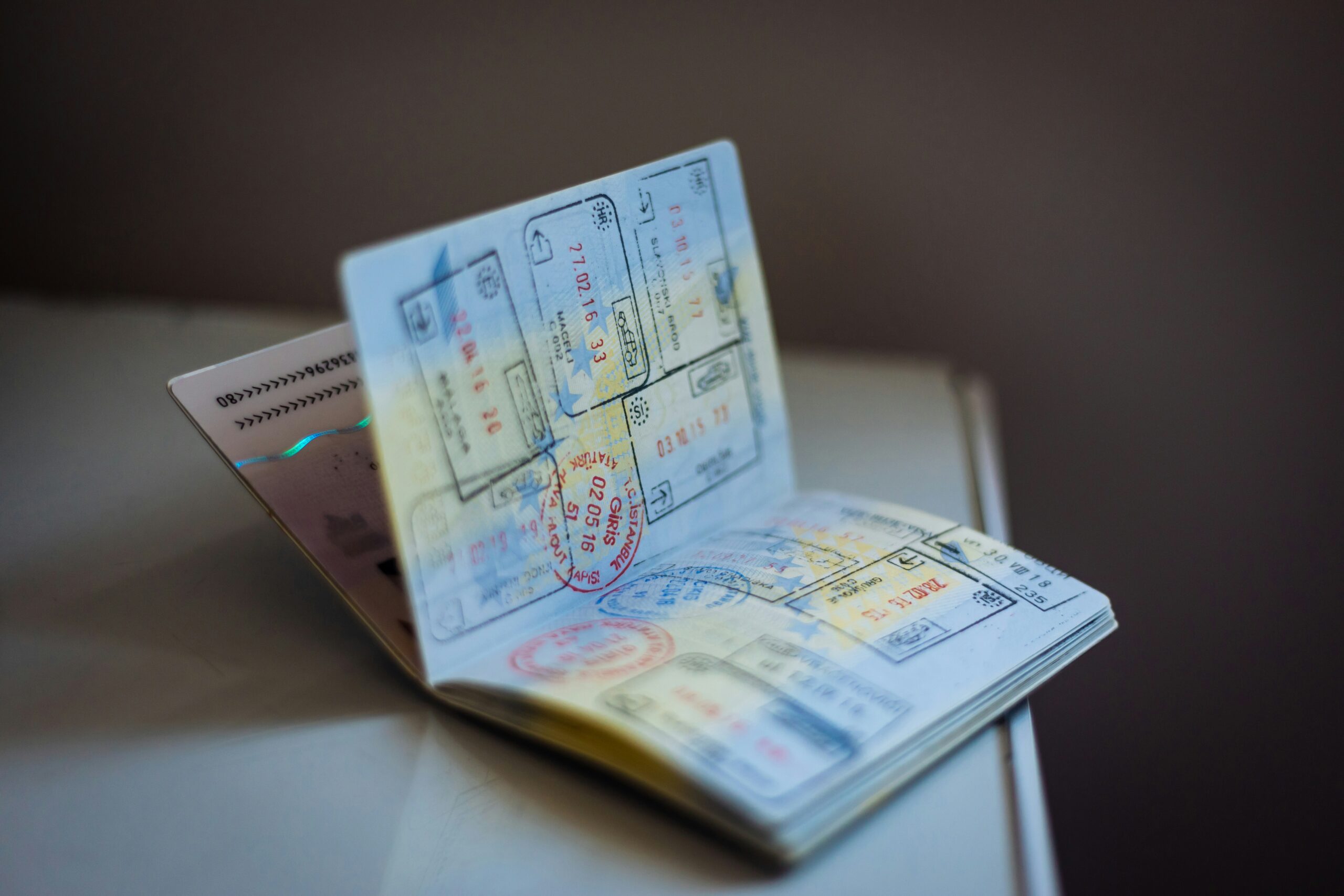
A visa overstay does not always prevent a marriage-based green card, but the result depends heavily on the facts.
Important questions include:
- Whether the applicant was admitted or paroled into the United States
- Whether the sponsoring spouse is a U.S. citizen or permanent resident
- Whether the applicant worked without authorization
- Whether the applicant violated another immigration status
- Whether removal proceedings have begun
- Whether the applicant has accumulated unlawful presence
- Whether the applicant may be required to leave the country
Departing the United States after accruing unlawful presence may trigger a three-year or 10-year bar. Some applicants may qualify for a waiver, but approval is not automatic.
An applicant should not assume that marriage erases an overstay or other immigration violation.
What If the Foreign Spouse Entered Without Inspection?
Marriage to a U.S. citizen does not automatically allow every person who entered without inspection to receive a green card inside the United States.
The available options may depend on whether the applicant:
- Qualifies under a provision such as Immigration and Nationality Act Section 245(i)
- Has a qualifying military connection
- Is eligible for parole or another form of relief
- Must pursue consular processing
- Qualifies for a provisional unlawful-presence waiver
- Has a prior removal order or multiple unlawful entries
These cases require careful evaluation. Leaving the United States without an appropriate strategy may trigger a reentry bar or expose the applicant to other immigration consequences.
Can Criminal History Affect the Application?
Criminal history can affect the foreign spouse, the sponsoring spouse, or both.
Certain convictions may make the foreign spouse inadmissible or require a waiver. Even an arrest that did not result in a conviction may need to be disclosed and documented.
The petitioning spouse’s history can also matter. Some offenses may restrict the ability to file a family petition, and allegations involving domestic violence, sexual offenses, or other serious conduct may require additional legal analysis.
Applicants should disclose all arrests, citations, charges, convictions, and sealed or expunged cases to their attorney. Immigration law does not always treat a criminal matter the same way state criminal law does.
What Happens If the Couple Divorces?

The effect of divorce depends on the stage of the immigration process. If the marriage ends before the foreign spouse becomes a permanent resident, the marriage-based petition generally cannot continue as an ordinary spousal case.
If the foreign spouse already received a 10-year green card, divorce does not automatically terminate permanent residence. However, USCIS may review the original marriage in a later immigration proceeding or naturalization application.
A person who received conditional permanent residence may be able to request a waiver of the joint filing requirement when removing conditions if the marriage was entered into in good faith but later ended in divorce. Separate protections may also exist for spouses subjected to battery or extreme cruelty.
Divorce does not create a universal way to continue every pending marriage-based case. Anyone experiencing separation, abuse, or divorce should obtain advice based on their current status and filing history.
Conditional and Permanent Green Cards
If the couple has been married for less than two years when permanent residence is granted, the foreign spouse generally receives conditional permanent residence valid for two years.
The couple normally files Form I-751, Petition to Remove Conditions on Residence, during the 90-day period before the conditional green card expires. Certain applicants may request a waiver of the joint filing requirement based on divorce, abuse, extreme hardship, or another qualifying circumstance.
If the couple has been married for at least two years when permanent residence is granted, the foreign spouse generally receives a 10-year green card. A 10-year card must still be renewed when it expires, but renewing the card is different from reestablishing eligibility for permanent residence.
Marriage-Based Green Card Questions
Does the marriage have to take place in the United States?
No. A marriage performed outside the United States may qualify if it was legally valid where it took place and is recognized for U.S. immigration purposes.
Can a student apply for a green card after marrying a U.S. citizen?
Marriage may provide a basis for a petition, but the timing of the relationship and the student’s intentions when entering the United States may be examined. A student should obtain advice before filing, traveling, or making statements that could conflict with representations made during the visa process.
Is a fiancé visa faster than a spousal visa?
Not necessarily. Processing times and government policies change. A K-1 fiancé visa also requires the couple to marry within 90 days of the foreign fiancé’s admission and then complete a separate permanent-residence process. Couples should compare the full process, costs, eligibility requirements, and likely timeline before choosing an option.
Can the couple file without an attorney?
An attorney is not legally required in most marriage-based cases. Some couples successfully file on their own. However, professional guidance may be particularly valuable when the case involves unlawful presence, entry without inspection, prior immigration filings, criminal history, financial-sponsorship problems, separation, divorce, or inconsistent records.
Does an approved Form I-130 guarantee a green card?
No. Approval of Form I-130 establishes the qualifying family relationship. The foreign spouse must still complete adjustment of status or consular processing and establish admissibility and eligibility for permanent residence.
Can an attorney guarantee approval?
No attorney can ethically guarantee that USCIS or the Department of State will approve a case. An attorney can evaluate eligibility, identify risks, prepare the filing, organize the evidence, and respond to problems, but the government makes the final decision.
How Hayoon Kane Law Firm Can Help

Attorney Hayoon Kane has conducted more than 1,000 immigration consultations and has personal experience with the U.S. immigration system as a former international student and marriage-based green card applicant.
Hayoon Kane Law Firm assists clients with:
- Determining the appropriate marriage-based immigration process
- Reviewing the foreign spouse’s entry and immigration history
- Identifying unlawful-presence and inadmissibility concerns
- Preparing Form I-130 and related filings
- Organizing evidence of a bona fide marriage
- Reviewing Affidavit of Support requirements
- Preparing for USCIS or consular interviews
- Responding to Requests for Evidence
- Addressing separation or divorce during the process
- Preparing petitions to remove conditions on residence
- Evaluating waivers or alternative immigration options
The firm provides services in English and Korean and works with clients throughout the United States and abroad by telephone and video conference.
Speak With a Marriage-Based Green Card Attorney
A genuine marriage is the foundation of a marriage-based green card case, but it is only one part of the process. Immigration history, visa availability, financial sponsorship, admissibility, supporting evidence, and filing strategy can all affect the outcome.
Early legal guidance can help couples understand which process applies, identify complications before filing, and submit a complete and organized application.
Contact Hayoon Kane Law Firm to schedule a consultation and discuss your marriage-based green card options.
This article provides general information, not legal advice. Reading it or contacting us does not create an attorney-client relationship. Immigration laws and policies change often, so speak with an attorney about your specific situation.